The Most Important Vitamins for Eczema
Even though eczema is seen on the surface of the skin itself, it starts deep inside your body, and there is nothing more important than having enough vitamins for eczema recovery, and there is nothing worse than being deficient in those vitamins.
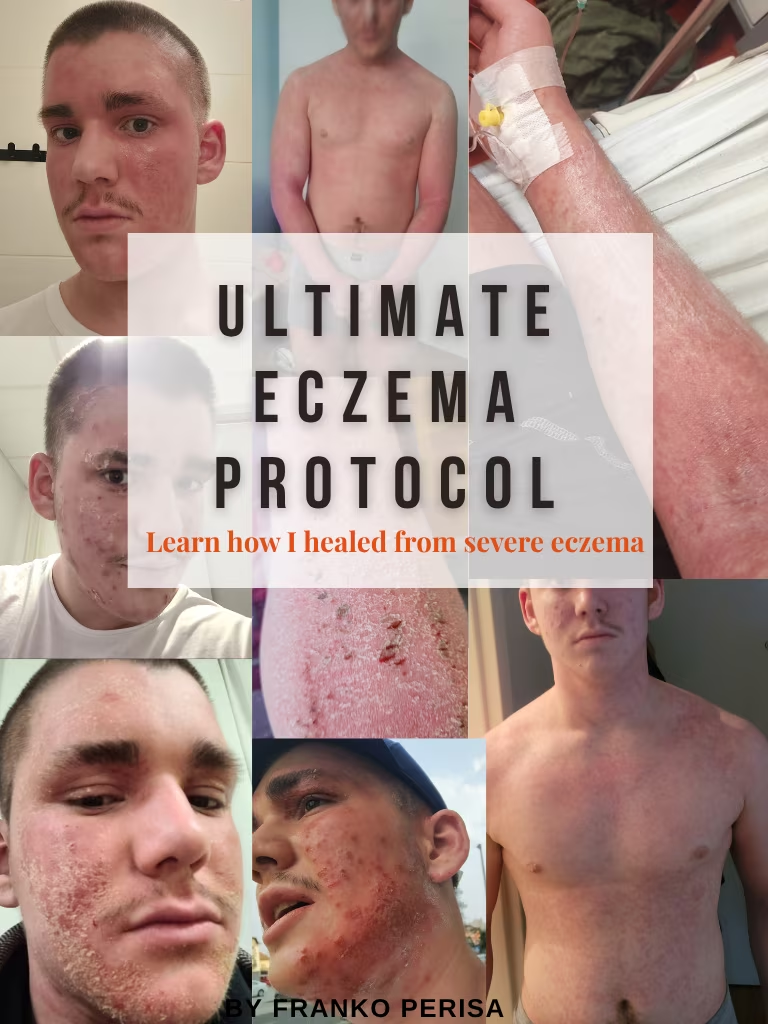
I made a list of the most important vitamins for people with eczema. These vitamins are proven scientifically to be the best for healing eczema, but I also included my personal experience as somebody who healed from a severe case of eczema, and somebody who, on a daily basis, works with dozens of people to help them do the same.
Research shows that most people are deficient in these vitamins, which means that even if you didn’t have eczema, chances are you are deficient in them anyway, like most people are. Also, there have been studies that suggest that ordinary people with eczema are more likely to be deficient in certain vitamins than people without eczema, especially in those vitamins that are most needed for healthy and eczema-free skin.
Also, note that vitamins are just one of many factors that are important in eczema healing, and they are unlikely to help you significantly on their own. If you want to know step by step how I healed my severe eczema and how others are doing the same through my example, join The Ultimate Eczema Protocol, where you get access to all of the resources I collected over the years of research, and a community with people who understand you.
The Ultimate Eczema Protocol
The Ultimate Eczema Protocol will teach you, step by step, how I healed from a severe case of eczema and how others are doing it too with this protocol.
What You Get For FREE (worth $740):
✅Ultimate eczema protocol (ALL COURSES)
✅Community with people who understand you
✅24/7 access to me (ask me anything)
Why Vitamins Matter for Eczema
Vitamins are essential compounds that the human body needs to function normally. If you are deficient in certain vitamins, the results of deficiency are often terrible for your health and, in the worst case, life-threatening.
Vitamins are needed for growth, development, metabolic processes, a healthy immune system, and energy production. Humans get vitamins from food and supplements.
. There are 13 essential vitamins, and some of them are vitamins A, C, D, E, K, and the B vitamins
Vitamins are usually divided into 2 main categories:
Water-soluble Vitamins: These travel freely through the body, and excess is excreted via urine, requiring frequent consumption. They include Vitamin C and all B-group vitamins (B1, B2, B3, B6, B12, biotin, folate, pantothenic acid). They require water to work properly, which means you should drink them with water if you are taking them in a supplement form.
Fat-soluble Vitamins: These are stored in the body’s cells (fat and liver) and include Vitamins A, D, E, and K. They require fat to work properly, which means you should drink them when you are eating a fatty meal to maximize the effect of the supplement.
But besides all of that, they are important for the skin directly and indirectly. Fat-soluble vitamins are very good for the skin, but also if the rest of your body is deficient in these vitamins, then you can develop problems like leaky gut, which leads to eczema. Also, immune imbalances and overreactions, which also cause eczema, are often a consequence of a vitamin deficiency.
This especially makes sense when you consider that people with eczema are shown to be more deficient in these vitamins than other groups of people in one 2024 study.
Vitamin D3 – The Most Important Vitamin for Eczema
Vitamin D3 is, in my opinion, by far the most important vitamin for eczema or any issue that deals with inflammation. Vitamin D3 acts as a natural antibiotic without any side effects. It helps with infections, lowers inflammation, and reduces allergies, which are often connected to eczema.
These are all things that were scientifically proven, but I am also talking from personal experience. As somebody who dealt with a scary infection when I had eczema, I can say that vitamin D3 saved my life.
I once got such a bad infection that I ended up in the hospital for a month, and they gave me so many antibiotics that they lost effectiveness. After a couple of weeks, the infections returned, but the antibiotics didn’t have as strong an effect as before, which made life even more difficult.
I somehow went through another 8 months of that agony, which is when I got an infection so bad that it made my skin go black. That is when I started researching vitamin D3, and I got some from the supplier I now trust the most, which is Dr. Berg. I started fasting and consuming a lot of vitamin D3, and the infection was gone in 4 days. I still take Dr. Berg’s vitamin D3 + K2 supplement, and I believe in it so much that I actually made a whole article talking about it.
If you know anything about vitamin D3, you probably know that the recommended dose is 600 IUs per day, but what you didn’t know is that it is the minimal dose you should take to not develop severe bone problems. The daily amount you should take is much, much more than that. Personally, I take 30000IUs per day, and I took more when I had those horrible infections.
Vitamin D3 is also a fat-soluble vitamin, which means that you should take it with fat like butter. Also, you will never get enough vitamin D3 from food there are some foods that have minimal amounts, but you will never reach these numbers with them. Humans got vitamin D3 from the sun for most of human history, but now we have supplements that also do a great job.
If I could have one supplement for the rest of my life, it would be vitamin D3 without any hesitation or second thought.
If you want to learn more about vitamin D3, then you should definitely read my full guide on Vitamin D3.
Vitamin E – The Antioxidant That Fights Eczema Inflammation
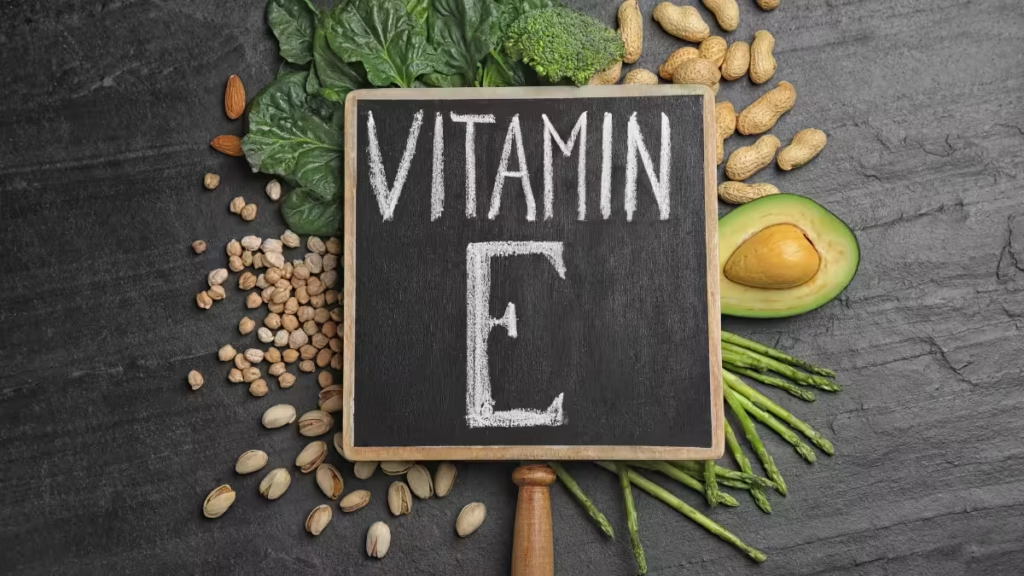
Vitamin E does many great things for the human body, but it is in many ways especially important for people with eczema and skin problems because it actively helps heal the skin barrier.
Vitamin E exists in 8 forms; the most biologically active is alpha-tocopherol, which is the form used in most eczema clinical trials and a form that high-quality supplements are made of.
Foods that have vitamin E are: eggs, fatty fish, meat, avocados, nuts, etc.
I would personally still choose to get vitamin E in a supplement form to try to get therapeutic amounts similar to vitamin D.
Vitamin K2

I would say this is the most underrated and underappreciated vitamin on this list. Vitamin K2 is very useful on its own, but even more importantly, other vitamins don’t work properly without it. Especially Vitamin D3, which is the most important vitamin for people with eczema or any skin problem. Vitamin D3 really has trouble working properly without vitamin K2, and your body will not absorb as effectively without it.
Studies show that Vitamin D3 has 70% higher absorption rate when taken with vitamin K2.
Going back to the vitamin D3 that I use, which is Dr. Berg’s vitamin D3 supplement, Dr. Berg put vitamin K2 inside every serving of Vitamin D3 to maximize the positive effects for eczema. Most supplement companies don’t do this, so they can maximize profit instead of giving you something that will actually heal and help you.
Vitamin K2 is also very anti-inflammatory on its own, helping with redness, pain, irritation, and supporting the building of a strong skin barrier.
Good sources of vitamin K2 from food are usually animal products, as all fat-soluble vitamins are. You can find plenty of vitamin K2 in eggs, butter, cheese, and meat.
Vitamin A – Important for Skin Cell Renewal
While other vitamins are amazing for fixing some problems that create eczema that are deeper in your body, vitamin A focuses on fixing the skin itself and making it strong, healthy, and uninflamed.
Without enough vitamin A, your skin could be very itchy, inflamed, red, dry, and slow to heal, especially from infections.
Vitamin A was in many studies shown to be one of the key factors for skin cell growth and regeneration, and without proper amounts of it, your skin will not be able to heal properly.
Also, vitamin A strengthens your skin’s ability to hold on to moisture, which means that your skin will be dry without it, even if you take a moisturizer or a cream in some form, because your skin will not be able to hold on to that hydration without proper amounts of vitamin A.
Animal foods are by far the best source of vitamin A, so you should be consuming a lot of eggs, dairy, meat, and most importantly, liver from time to time. Liver has so much vitamin A that if you ate just one inside a two-week period, you would have enough vitamin A to support your skin and your whole body.
Plant sources usually don’t have vitamin A, but even if they do, the vitamin A from those sources is not as bioavailable, which means that your body will not be able to absorb it as well as vitamin A from animal sources.
Vitamin C – Helps Rebuild Your Skin Barrier

Speaking of skin barrier, vitamin C is also in that conversation for one of the most important vitamins for healing your skin from wounds, infections, and anything similar.
Taking high doses of vitamin C is well known for fighting against colds, but it is also very effective and important when we are talking about building and repairing the skin barrier and cells.
One study has found that ordinary people with eczema have less vitamin C than other groups of people that were tested, which suggests that eczema could be partially caused by a vitamin C deficiency.
I definitely recommend taking high doses of vitamin C in a supplement. Vitamin C is also a water-soluble vitamin, which means it absorbs with water, and if your body has too much, you will just piss it away, so overdosing is very rare.
Conclusion
Vitamins are necessary for humans and our survival. Being deficient in some vitamins can have terrible consequences, and one of those consequences can be skin inflammation like eczema. By far the most important vitamin for eczema is vitamin D3, which helps all other vitamins work properly and is a natural antibiotic with anti-inflammatory properties.
At the very core of the word eczema or dermatitis means skin inflammation, and vitamin D3 is one of the best things you can consume for lowering and stabilizing inflammation. Fat-soluble vitamins, which are vitamins A, D, E, and K, all made the list and are very important for your skin to function optimally. The best way to treat your eczema is not to take a lot of one of these vitamins, but to have enough of all of them because they all work together in your body for the best results.
FAQ
What is the most important vitamin if you have eczema
Vitamin D is by far the most important vitamin for eczema, especially in vitamin D3 form, which is the best and most bioavailable form out there. Vitamin D3 is a natural antibiotic with anti-inflammatory effects that help with infections, allergies, redness, and everything else. Vitamin D3 is found in the sun and supplements.
How much vitamin D3 should I take?
You should take 10000IUs of vitamin D3 per day with vitamin K2 for higher absorption. Also, because vitamin D3 is a fat-soluble vitamin, you should take it with some dietary fat like butter for optimal absorption.
When should I take vitamins for the best effects?
The most important vitamins for eczema are fat-soluble vitamins, which are vitamins A, D, E, and K. These vitamins should be taken with a fatty meal or just with some dietary fat like butter, optimally with the first meal of the day.
How long before I see results from vitamins for eczema?
It depends on multiple factors, like how much you take and how severe your eczema is. Your body will have positive effects as soon as you take them; for example, if you have an eczema-causing infection, vitamin D3 will work as soon as you take it.
Can taking vitamins actually stop eczema flare-ups?
There are multiple factors behind eczema healing, and vitamins are just one of those factors. While vitamins can help you, they will not help you significantly unless you heal your gut. If you want to know how I healed my eczema by healing my gut, join The Ultimate Eczema Protocol.
What are the most important vitamins for eczema?
The most important vitamins for people with eczema are vitamin D3, vitamin A, vitamin K2, vitamin E, vitamin B6, and vitamin C. Healing is not in taking a lot of one of these vitamins and being deficient in others, but having enough of all of them because they all work together.