You probably have big goals you want to achieve, but the problem is that you will fail if you are not willing to improve your sleep quality for athletic performance.
Your dream as an athlete may be to become the national champion of your country, to become as strong as you believe you can be, or maybe even to become a world or Olympic champion. Doesn’t matter. What matters is to achieve those goals.
If you are an athlete, you probably know how it feels to be full of motivation to do another training session, but your mind is willing, but your body just will not let you, and all of that can be fixed by improving your sleep with a formula that I made for you. With this guide, I will help you optimize your sleep and sleep routine, and help you recover faster from workouts, prevent injury, and recover faster from injuries you are dealing with right now.
Studies show that athletes who sleep less than 7 hours per night have a 1.7 times higher injury risk than those who get 8+ hours of high-quality sleep per night. The thing that you need to think about is that this is not only a statistic, but this is also your dream on the line!
RELATED: Best Sleep Trackers for Athletes
How to Optimize Your Sleep Environment to Improve Sleep Quality for Athletic Performance
This is a great section to start with because of how overlooked it is. Many people just don’t know how important it is to optimize sleep enviroment for your physical recovery.
If you are too cold or too hot, you are going to have a massive problem falling asleep. I know that feeling, and you most likely know it too when you are trying to fall asleep, but you just can’t because it is too hot, and then you check your phone to see what is, and you are way past your sleeping schedule.
After that, you became frustrated and stressed because you would not have enough sleep for tomorrow, and then, because of the stress, it would be even harder to fall asleep. The most important thing you need to know is to keep your room between 60°F and 67°F for optimal sleep, so probably a bit cooler than you thought.
Complete darkness is also very important because even a little bit of light exposure can suppress melatonin production, which will make you less sleepy, and it will be harder for you to fall asleep because of the disturbed circadian rhythm. It makes the whole thing even worse when you realize that your eyelids only block around 15 percent of ambient light.
I hope I didn’t sound too negative by telling you this, because there is a very effective and easy solution to the problem of light during sleep. Those solutions are blackout curtains, and they do the job fantastically, but don’t just buy the first blackout curtain that comes to your mind and read my article aboutthe best blackout curtains on the market to see which one fits your needs the most.
Investing in a high-quality mattress is also very important for your sleep and recovery. Of course, the more comfortable you are and the more your body is relaxed, it will be easier to fall asleep, but it is also important to note that some mattresses are proven to be more effective for recovery than others. Research from National Library of Medicine shows that shows that quality of a matrass can corelate to less back pain and better phisical recovery.
Set Up Your Sleep Environment for Success
Master Your Circadian Rhythm with Strategic Light Exposure
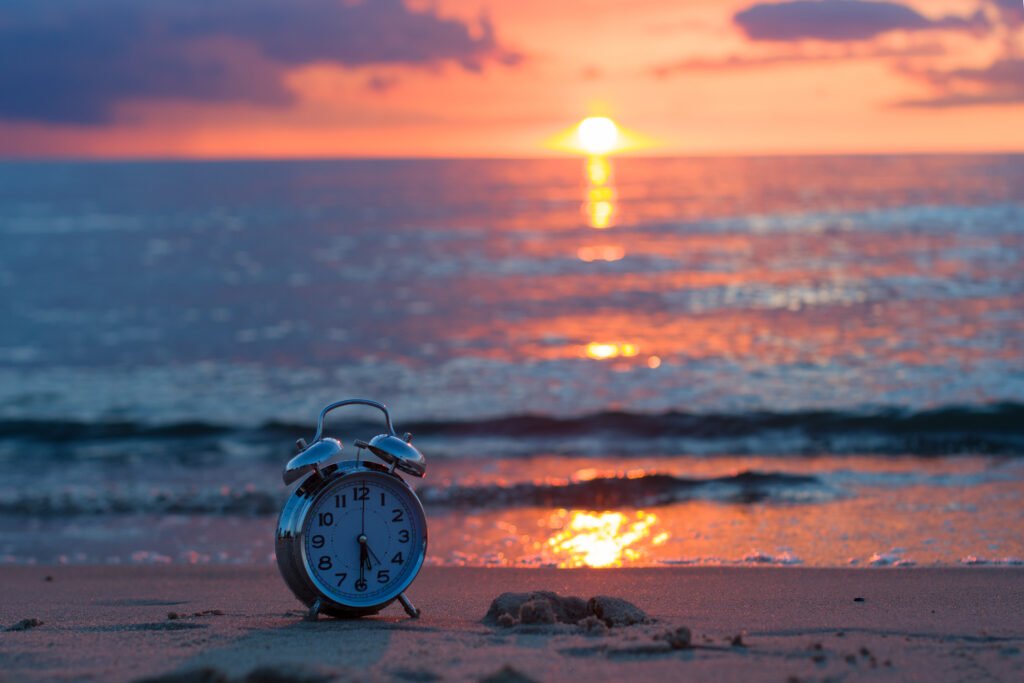
Circadian rhythm is another heavily underestimated topic when we talk about sleeping quality. The thing that most people get wrong that I don’t want you to get wrong is the fact that light is neither good nor bad for your sleep, but it depends on when.
To make things clear and easy to understand, you should get a lot of light early in the morning, preferably 10-30 minutes of bright light exposure within 30 minutes upon waking up. This sets your body up for better sleep later at night because your body now knows it is morning time, and it can understand when nighttime is. If you don’t do this, and for example, you wake up and put your curtains down so it is dark, your body doesn’t know that it is morning time, so it will be confused later at night and won’t let you fall asleep.
Other benefits of morning sunlight exposure are that morning sunlight increases cortisol awakening response by 50 to around 80%, which will provide natural energy, and it will improve your sleep drive around 15 hours later.
At night, it is the complete opposite story, and you need as little light as possible, and make sure that the light you do get is not blue light, not even the smallest amount. Because, as I said earlier, when your brain sees blue light, it will think it is the middle of the day, and it should be as alert as possible. One way to counter this is to wear red light-blocking glasses for at least 90 minutes before you go to bed, so your brain adapts and understands that it should be in sleep mode right now.
If you don’t know what blue light blocking glasses are or don’t know which ones are for you, then you should read my article about Best Blue Light Blocking Glasses for Athletes.
If you did this, that is already a great improvement, but not enough to call it an optimal sleeping environment, so something that is maybe even more important than not looking at blue lights a couple of hours before you sleep is optimal darkness while you sleep.
Many high-profile studies have shown that this is the case and that humans rest best when they sleep in a room that is deprived of any light. If you are interested in learning about this topic more deeply, I highly suggest you read this study from PubMed that talks about the negative effects of light exposure during sleep.
The Best way to counter this and to have your whole room dark is blackout curtains, which will make your whole room dark. If you are interested in learning more about why blackout curtains are very useful for athletes, then you should read my article about The Best Blackout Curtains for Athletes, which will not only tell you the importance of blackout curtains, but also tell you which one is for you and what is the best one for you.
Time Your Training to Enhance Sleep Quality
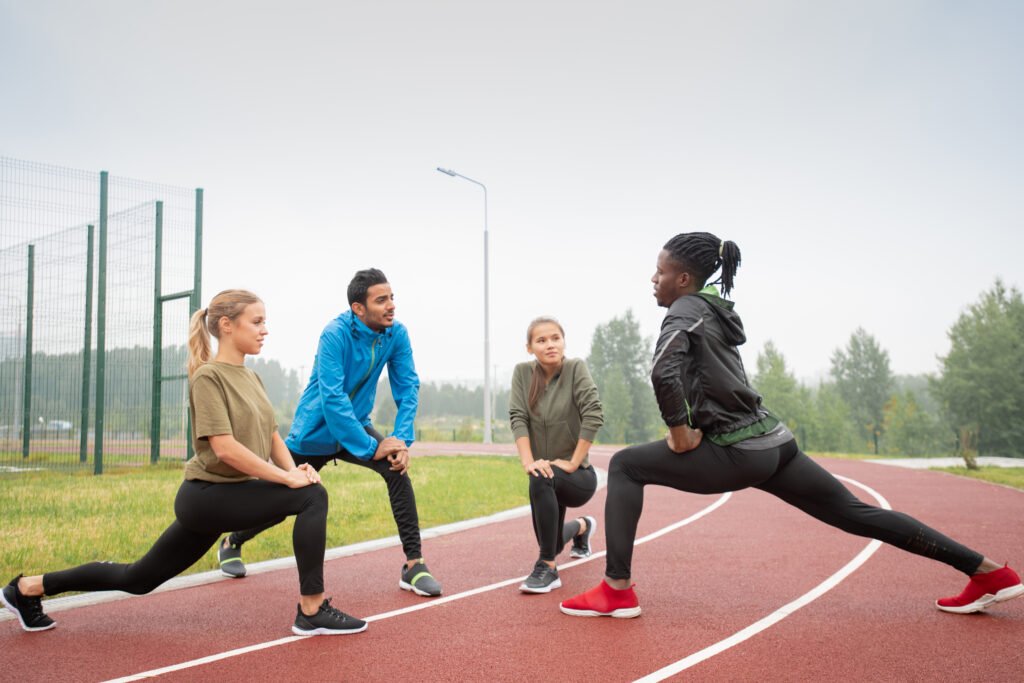
Before we start with this section, I want to tell you that this is not as important as other things on the list, and I know that when you train, it is one of those things that most people can’t control because of their jobs, education, family obligations, and other things that are far more important. Saying that, I will still tell you about the optimal time for training because there might be somebody who can train whenever they wish, and I am always looking to provide all the information there is around a topic for my readers.
Avoid high-intensity training within 4 hours of bedtime.
I expect this one to be at least a little bit controversial because many of you can’t choose when you train, and this might be the only time you get to train, or simply your local club, whatever it might be, works only at later parts of the day.
First of all dont worry I know this feeling because I have been through it myseelf my boxing sesion for years were at 8 30PM and ended around 10 30PM and by the time I shower, get home and prepair for sleep it is already midnight which makes it even worse for most people because many of us have jobs and schools that start around 8 or 9 in the morning so we will not get enouph sleep and our body temperature will be raised before sleep.
The problem with raising your body temperature before sleep is that it raises cortisol for a couple of hours after a workout, and to counter this, I would recommend a cold shower to make the body temperature decline faster.
What to do instead?
Instead of a high-intensity training session, you should focus on light movement or stretching in the later parts of the day because not only will they be easier for your sleep, but they will also help you with your sleep.
Morning training
Now this is just me, but I have a sneaky suspicion that most people would agree with me when I say that morning trainings are the best. I just feel better and happier when I train in the morning. First of all, it is not as crowded if you are going to the gym, and I feel a boost in energy when I do them.
This happens for multiple reasons, some reasons may be stronger than other ones, but our day to day lifes are not easy at all and if you do a hard 8 hour shift and than have to prepare some food to eat or something similalar your will to go to the gym may be weakend and even if you go chances are that you are already tired.
It is proven that if you exercise in the morning, you will expeiance 25% higher deep sleep duration than if you train in the evening. Of course, if you have any knowledge on this topic or if you have read some of my other articles, you will know the importance of deep sleep for humans and especially for athletes. The most important thing that deep sleep will help you with as an athlete is that it will boost your growth hormone, which is a must for recovery and growth.
Fuel Your Body Right for Recovery Sleep
If you are reading this, you are probably an athlete who wants to maximize your potential and realize your goals. So most likely you are on a strict healthy diet, but don’t forget that when you are eating, it can be as important, if not even more important, for your sleep as what you are eating. Yes, that is true; many studies have shown that your body can’t fully commit to deep, impactful sleep if it is busy digesting a massive meal. That’s because when you eat, your metabolic rate increases by 10-35% as your body works hard to break down the food you eat.
When that happens, your body temperature rises, which, you guess, is the opposite of what you should want if your goal is to improve sleep.
Many of you probably know that this is a problem, but you probably didn’t know how big a problem it is until you read this.
I struggled with this a lot, and some people are fine with not eating 3 hours before bed, but I sleep the best when I don’t eat 4 hours before bed.
Another extremely important thing you should pay full attention to, because of how important it is for the quality of your sleep, is a high-quality mattress. Now I know for some people this might be a big investment, but I want to encourage you to consider it because of how extremely important it is for both your health and physical recovery during sleep
. There have been dozens of studies that show the importance of the surface you sleep on for physical health and recovery, while you most likely are sleeping on the matrass LoL if you want to maximize your athletic potential, you should without a doubt invest in a very high-quality mattress.
As I told you earlier, room and body temperature are very important for both falling asleep and staying asleep. So it would be amazing if you could do two things at once and get a cooling pillow, which I am a huge fan of. With one of these, you get the benefits of a high-quality pillow, but it can help your body cool down, which will help your sleep even further.
I haven’t seen many people who are in the space of physical recovery for athletes talk about this, and I think it is a big thing. These are air cleaners and humidifiers. Just think about it, you are breathing nonstop all your life, and one third of it is coming during sleep, so why wouldn’t you make the room you are spending all that time of your life in cleaner and more optimal for your goals and dreams?
The Caffeine Cutoff Rule: Respect the 8-10 Hour Window
As hard and painfull as it is for me to say this caffeine is evil for your sleep and that is why in most cases I reccomend you to not drink it at all, but if you feel like you are performing the best with it in your diet here are some tips on how you can counter this negative effect of cofee and have both your coffe and high quality sleep.
Here are the facts: caffeine has a half-life of 5-6 hours. That means if you drink a cup of coffee at 3 PM, which contains around 200mg of caffeine, you’ll still have 100mg in your system at 9 PM. Even if you “can fall asleep fine” after an afternoon coffee, studies show it reduces deep sleep by 15-20%. You might be sleeping for 8 hours, but you’re not getting the quality recovery sleep you need.
Optimaly if you want all the results from the things I talked about today, you should be in bed trying to sleep at 10 PM. That means that your last caffeine consumption should be no later than noon, so most of the caffeine is already out of your body. Doing this, you will both fall asleep more easily, and you will get more deep sleep, which I already mentioned as instrumentally important for athletes.
What about my pre-workout? Well, I am of the belief that if you eat and sleep properly, you will not need a pre-workout, and the reason why people need coffee in the first place is that they are not responsible enough to make their sleep a priority. But if you really need a pre-workout, I would recommend taking one without caffeine or train as early as you personally can, so the effects of caffeine would not disturb your sleep structure.
This is so important that A study published in ScienceDirect in June 2023 stated: ‘The consumption of caffeine impairs subsequent total sleep time, sleep onset latency, wake after sleep onset, sleep efficiency, and sleep architecture. The reduction in total sleep time is dependent on the final dose of caffeine and the time of day that it is consumed relative to bedtime.”
Hydration Balance: The Goldilocks Approach
Without good hydration, not only can you forget about your goals as an athlete, but you can also forget about your health and well-being overall. Since we were little, we were taught about the importance of water and other liquids, and rightfully so. I am not here to dispute the fact that you need water every day just to stay alive, but there are certain downsides of drinking a lot of liquid too close to your bedtime.
This problem is very simple and straightforward. If you drink a lot of water before bed, there are bigger chances of you waking up through the night to go pee.
You might think that it is not that big of a deal because the bathroom only lasts like 20 seconds or something like that, but once you wake up, it is much harder to fall asleep again. This especially escalates if you look at the lights, which will mess up your circadian rhythm, or if you maybe feel hungry and take a snack from your fridge, which will escalate things in a way that you can’t fall asleep for the rest of the night.
And this is without counting the possibility that you may look at your phone and check on Instagram or Twitter, and just start endlessly scrolling there.
I wanted to mention it because I know it is a pretty common problem. Even though this doesn’t happen to me very often, especially since I started doing this method, I trained boxing with a guy who had these problems, and he told me that he sometimes has to go pee in the middle of the night up to 4 times, and that it messed up his sleep completely because he had a hard time going back.
Similar to the problem, the solution is very simple as well; you just need to drink the majority of your water in the earlier parts of the day and slow down in the evening, and then don’t drink anything completely right before bed.
A practical timeline:
- 3+ hours before bed: Drink normally, aim to meet most of your hydration needs
- 2 hours before bed: Sip only as needed, limit to 4-6 ounces
- 1 hour before bed: Only take small sips if genuinely thirsty
- 30 minutes before bed: Avoid drinking entirely
Also, go to the bathroom right before bed, even if you don’t feel like you really need to. This “preemptive strike” can save you from waking up 2-3 hours into your sleep.
The Alcohol Truth Bomb: It’s Not Helping
If you are serious about being an athlete and you are competing in any way, amateur or professional, you probably already know how harmful alcohol can alchocol be for your sleep, which directly impacts your performance. Even though I know that most of you reading don’t drink alcohol or at least very often, I still wanted and needed to put this section here so you have even less of a reason to start drinking or, of course, if you are already drinking often, to stop doing that.
Alchocol is known to help you fall asleep faster and easier, which at first glance might seem like an excellent thing, but I assure you it is not. Even though you will fall asleep more easily, that sleep won’t matter much because it will suppress REM sleep by around 51%, and REM sleep is especially important for the health of your brain, and if you lack REM sleep, your reflexes will suffer a lot.
If it was not bad enough, alcohol increases sleep fragmentation, which means you’ll wake up more throughout the night. You might also experience more vivid dreams or nightmares, increased heart rate, and poor temperature regulation.
If you must drink alcohol because there is a social event or something similar, try to avoid alcohol within 4 hours of bedtime at a minimum. Also, make sure to drink all of your supplements the next day because alcohol depletes your body of a lot of important vitamins and nutrients.
Overcome Common Sleep Challenges Athletes Face
Athletes like you and me come across many sleep challenges, and in this section, I will teach you how to overcome sleep challenges that you may be facing.
One thing I always preach is don’t let perfection be the enemy of good, and I don’t want to confuse you with how many things I am telling you to do to achieve optimal sleep and recovery. I know that you have many challenges and problems that are not letting you have perfect sleep. I don’t live in a bubble either, even though that research about physical recovery for athletes is my profession, I mess up sometimes.
In this section, I will show you how to counter these challenges that might be occurring and causing you trouble.
Dealing with Muscle Soreness and Pain That Disrupts Sleep
Not many things are worse than finishing a hard training session and thinking to yourself, now I will go to sleep, and then all of a sudden you just can’t. Maybe your lags or shoulders are all sore, and they won’t let you fall asleep, or you can’t find a comfortable position. Dont worry you are not alone, not only that you are not alone, but that happens more often than not. There are some tips that I have for you that might change this.
Stretching before bed
I know that you are probably tired around 10-15 minutes before bed. That is most likely the most tired you are in a whole day, but you still should stretch before sleep because it will reduce muscle tension, improve blood flow, and decrease the pain signals your brain receives while you’re trying to sleep.
Strategic ice and heat therapy
It is not uncommon for people to argue about whether it is better to sleep cold or hot before sleep, but actually, they are both wrong and right at the same time; you should do both. It would be best to switch between ice and hot when you are showering for the best results.
If you prefer just cold therapy, you could ice your muscles, but I would recommend that you do that at least 1 hour before sleep because when you ice your body from the outside, it will warm you up from the inside, which will make you feel even more awake.
The positioning of your body
Positioning of your body during sleep can be influential for both the pain and the recovery of your body.
Starting with elevating sore limbs, for example, if your legs are destroyed from today’s or yesterday’s workout,t you should elevate them using a pillow while you sleep.
Similar to this, you can do the same with sleeping positions, where back sleepers can put their pillows under their knees to reduce lower back strain, which I personally had a lot of problems with when I first started to train in boxing around 6 years ago. Side sleepers would do best if they put a pillow between their knees. And I would not recommend that you sleep on your stomach at all because it is highly correlated to neck and back pain, as well as nerve compression.
Magnesium and CBD
Consider topical magnesium or CBD – Magnesium oil or lotion applied directly to sore muscles can provide localized relief. CBD creams (where legal) have also shown promise for reducing muscle pain without the grogginess of traditional pain medications.
When I first started researching magnesium oils, it was not because I was writing a blog or doing it out of interest, but as a profession, like I am now. I was researching it because I had to for my shoulder injury, and then when I realized how effective it was, I was in complete shock and knew I needed to go deeper into it. Magnesium oils aren’t only effective for injuries, but also for regular muscle recovery and pain relief from muscle soreness.
Very similar to magnesium oils, CBD creams and oils have also shown signs of reducing muscle pain and promoting faster recovery. Of course, don’t try to buy and consume CBD oils if you live in a place where they are illegal.
Smart Supplementation for Sleep Support
Let’s now talk about supplements. I have a feeling many of you thought this section would be higher in the article because of how important it is, but many of you will be surprised when you find out that I don’t rank supplements as high as some might. Don’t get me wrong, supplements are amazing, and they help you a lot, but the problem arises when you over-focus on them and then forget about the main stuff.
If you want to have successful sleep, you need to keep the main things in your focus and make supplements a secondary thing that adds to the fundamental rules and not the fundamentals themselves. This is not a popular opinion in the fitness industry, but that is because everyone wants to make some money off of you, and the easiest way is to sell supplements. What matters to me is that this is the scientifically correct opinion, even though many might not like it.
With saying all of the overlooked staff about supplementation, here is my list for the best supplements for sleep support.
Magnesium
It shouldn’t come as a surprise to you if I were to tell you that most people are magnesium-deficient, which causes problems like muscle cramps, fatigue, and weakness in muscles. Now this is pretty bad for an average person, but it gets so much worse for an athlete. To the point where you really just can’t function and train properly if magnesium-deficient.
Considering this, you might think that most athletes get enough magnesium for optimal training and recovery, but you are wrong because studies show that at least 51% of athletes don’t get enough magnesium to function properly, and of course, even fewer get enough magnesium for optimal results.
The main reasons that athletes who don’t consume magnesium supplements develop these deficiencies are that they lose magnesium while they sweat, and of course, athletes sweat a lot, especially those who do a lot of movement in their sport and in warmer parts of the year. Also, stress depletes magnesium as well, and athletes go through more stress than an average person, especially those who are competing.
I know how stressed I was when I first started competing in boxing, and honestly,y it is kinda funny when I look back, but it was not at the moment.
How can Magnesium supplements help your sleep?
Magnesium is important for much more than just sleep and is much more complex than just a mineral that helps sleep and recovery, but I will tell you what it will do for the sleep that is so useful to you.
Activates the parasympathetic nervous system
In simple words, this puts your body in the mood to rest and recover, allowing you to fall asleep easily because it will set you up in a mood for sleep. This is especially important if you are one of those people who want to go to sleep early because you are aware of the negative consequences if you don’t, but just can’t fall asleep and feel like you want to keep doing something or watch a Netflix show.
Magnesium will put you in a mood that will make you want to go to bed and fall asleep instead of watching another season of the show you probably don’t even like, or endlessly scrolling through Instagram or TikTok.
helps maintain a healthy circadian rhythm
As I already mentioned in this article, having a healthy circadian rhythm that knows when it is night and when it is day is extremely important. Because of constant exposure to destructive blue light that people have today, our bodies don’t know whether they should they prapere for sleep and rest or be concentrated and ready to work or move.
And it is not like I am attacking anybody, I am the same way most people are, but I know when to stop looking at my phone and computer or turn on a red light filter.
Binds to GABA receptors in your brain
This will make you more relaxed and less anxious by producing a natural calming effect.
This is amazing for your sleep because you will be less worried, and most people think about major problems in their lives right as they try to fall asleep. If you have some sort of competition tomorrow and you need a lot of high-quality sleep, but you are too worried to fall asleep, then I recommend you take more magnesium than usual.
L-Theanine
Unlike with Magnesium, I am not 100% sure if you heard about a supplement called L-Theanine, which is naturally found in green tea. If you are interested in reading about other teas that have an amazing effect on your sleep and recovery, then you should read my article about The Best Teas for Athletic Recovery.
Basically, the way L-Theanine works is that it increases alpha wave activities, which are associated with a relaxed state of alertness. Think of that calm, but focused state where you have great concentration, but also you are not very excited and pumped up. Besides this, L-theanine also boosts GABA and dopamine levels in your brain, which will further promote relaxation, which will make your sleep better.
Studies show that taking 200-400 mg of L-theanine before you go to bed can improve several things.
- Reduces the Time to fall asleep
- Improves sleep quality and time spent in deep sleep
- Reduced chances of waking up in the middle of the night
- Improves morning alertness
FAQ
How many hours of sleep do athletes really need?
I would say that athletes need 8-10 hours of sleep for optimal recovery and performance. Which is around 2-4 hours of what the general population is getting. During heavy training, you should add a nap during the day if you need to.
Is it better to get less sleep or sleep at inconsistent times?
Even though consistency is very important and you should go to bed and wake up around the same time every day, it is still better than not getting at least 7 hours a night.
Do sleep trackers actually work, and should I use one?
Yes, sleep trackers are, in my opinion, the number one investment you should make as an athlete, and that was the first investment I made when I started looking into this topic. I made a whole article talking about The Best Sleep Trackers for Athletes.
Can I catch up on sleep during the weekends?
Weekend sleep can help you with some sleep debt, but honestly not enouph especialy for an athlete like you. Your body needs consistent quality sleep every single night, and this is especially affects the next day’s training performance.
Do naps count toward my total sleep requirement?
Generally speaking, yes, they will be like a supplement to your nighttime sleep, but your main focus still should be a full night of sleep because it will trigger more deep and REM sleep.
How long before bed should I stop drinking water?
You should stop around 2 hours before going to bed, this will reduce the chances of you waking up in the middle of the night, which is the worst thing that can happen for your sleep espeacially if you were woken up from an important part of your sleep for recovery.
Conclusion
Basicly to summarize this comprehensive and complex article as short as I can, athletes need good recovery as much as they need good training, and there is no better way to recover their bodies to become the world-class athlete you desire to be than sleep. In this article, I covered absolutely everything you need to know about sleep and how to implement that advice for yourself to become a greater athlete and a healthier person in general.
From setting up your sleep from the moment you wake up, mastering your circadian rhythm so you can fall asleep in a matter of a few minutes, timing your training for better sleep, building a routine, and supplementation. I covered everything you need to know to become the best athlete possible, and if you want to learn more about just that, read some of my other content on similar topics.