
Eczema is becoming a bigger and bigger problem all around the world. Unlike most medicines, omega-3 for eczema actually attacks the problem from the inside out. Usually, people try to cover up the problem with corticosteroids and other things that have a lot of long-term side effects.
I suffered from eczema all my life, and I have tried everything- I mean every single thing modern medicine recommends and says that might help with eczema. Now that I have healed from eczema, I know that eczema is not a skin problem, but an inner body problem.
If you want to know how I healed my severe eczema and allergies the natural way, you should definitely read my article about it.
Even though I believe the diet is the most important thing in recovering from eczema, omega-3 played an important part in my journey of healing, and I recommend it all the time to people I work with who want to heal from eczema.
What Are Omega-3 Fatty Acids and Why Do They Matter for Skin?
Omega-3s are a family of polyunsaturated fatty acids. The three most important forms that you need to know about are ALA (alpha-linolenic acid, from plants), EPA (eicosapentaenoic acid), and DHA (docosahexaenoic acid).
EPA and DHA are the forms the body uses most efficiently for reducing inflammation and other positive effects that can help with your eczema and other skin problems. It was also found to help all autoimmune diseases in a study from PubMed.
The most important thing you have to know is that your body cannot synthesize omega-3s on its own, making them an essential fatty acid that must come from food or supplements.
You can’t know how good omega-3 is for you unless you know how bad high amounts of omega-6 are for your skin and body in general.
The optimal amount of the omega-6 to omega-3 ratio is 4:1, and in most of human history, we had that optimal ratio, but some studies have shown that today, they are as high as 40:1, which is 10 times more omega-6 than we should have in our bodies. This is because of our diets and lifestyles in the 21st century, especially in Europe and North America.
This imbalance creates terrible inflammation in your body, which shows up on your skin. Even though you feel and see the inflammation on your skin, the inflammation starts much earlier. And this is the main reason why I tell everybody in my guide on how to heal eczema. You will never heal if you don’t stop using seed oils, and I don’t care what you do and how many expensive creams you buy; you will never heal without throwing away your seed oils, which are full of omega-6 fatty acids.
Omega-3 lower inflamaton in multiple ways, and one of them is by reducing pro-inflammatory eicosanoids like prostaglandin E2 and leukotriene B4. So basically, omega-3 directly reduces the effects that make your skin red, swollen, itchy, and painful.
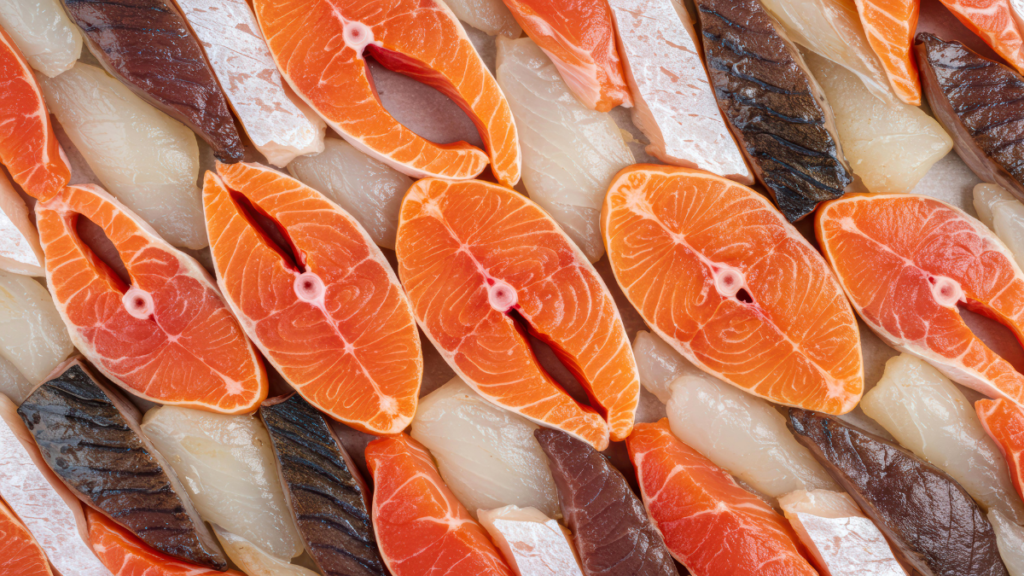
Best Food Sources of Omega-3 for Eczema
Even though to reach optimal amounts of omega-3s, you should take a supplement, there are amazing foods out there with a lot of natural omega-3s in them.
Fatty fish are literally a gold standard when it comes to omega-3 in foods.
Wild-caught salmon has around 2,200mg of EPA+DHA per 3oz serving.
mackerel provides ~3,400mg of EPA+DHA per 3oz serving.
sardines ~2,000mgof EPA+DHA per 3oz serving.
These three are the best and safest options, and you can very rarely go wrong with choosing one of these, but one important thing has to be mentioned, and that is the main reason why supplementation is a better form of getting omega-3s.
That reason is fishing farms and their bad treatment of fish. You see, when you eat a wild-caught fish, it has eaten its natural diet from the moment it was born to the moment it was caught, so you will get all the nutrients, vitamins, and omega-3s that they have when you eat them.
But unfortuanlty farm raised fish like salmon are getting fed a very unhealthy and poor diet under very unhealthy and poor circumstances and lifestyle. This makes farm-raised fish lack all the nutrients that make real wild-caught fish healthy. Not only that, but because of this, the farm-raised fish that you bought is also full of artificial coloring and additives, so it can look like a real thing even though it is not a real thing.
Algal oils are an amazing source of omega-3s as well, and the best source there is for those who practice plant-based diets. Now I have to tell you that a lion diet healed me from severe eczema that I had since I was a child, which is a diet where you only eat red meat, salt, and drink water. This is also the ultimate elimination diet, which is proven to be the best for most people, at least until they heal from eczema.
But besides that, Algal oil typically has around 400- 500 mg DHA per serving, which is not as much as fatty fish like salmon, but it is still great.
If you want to learn more about foods with the highest amounts of Omega-3 fatty acids, there is a full fact-check sheet that is made by a government organization, which is a list of all foods with a lot of EPA and DHA.
Omega-3 Supplements for Eczema — How to Choose the Right One
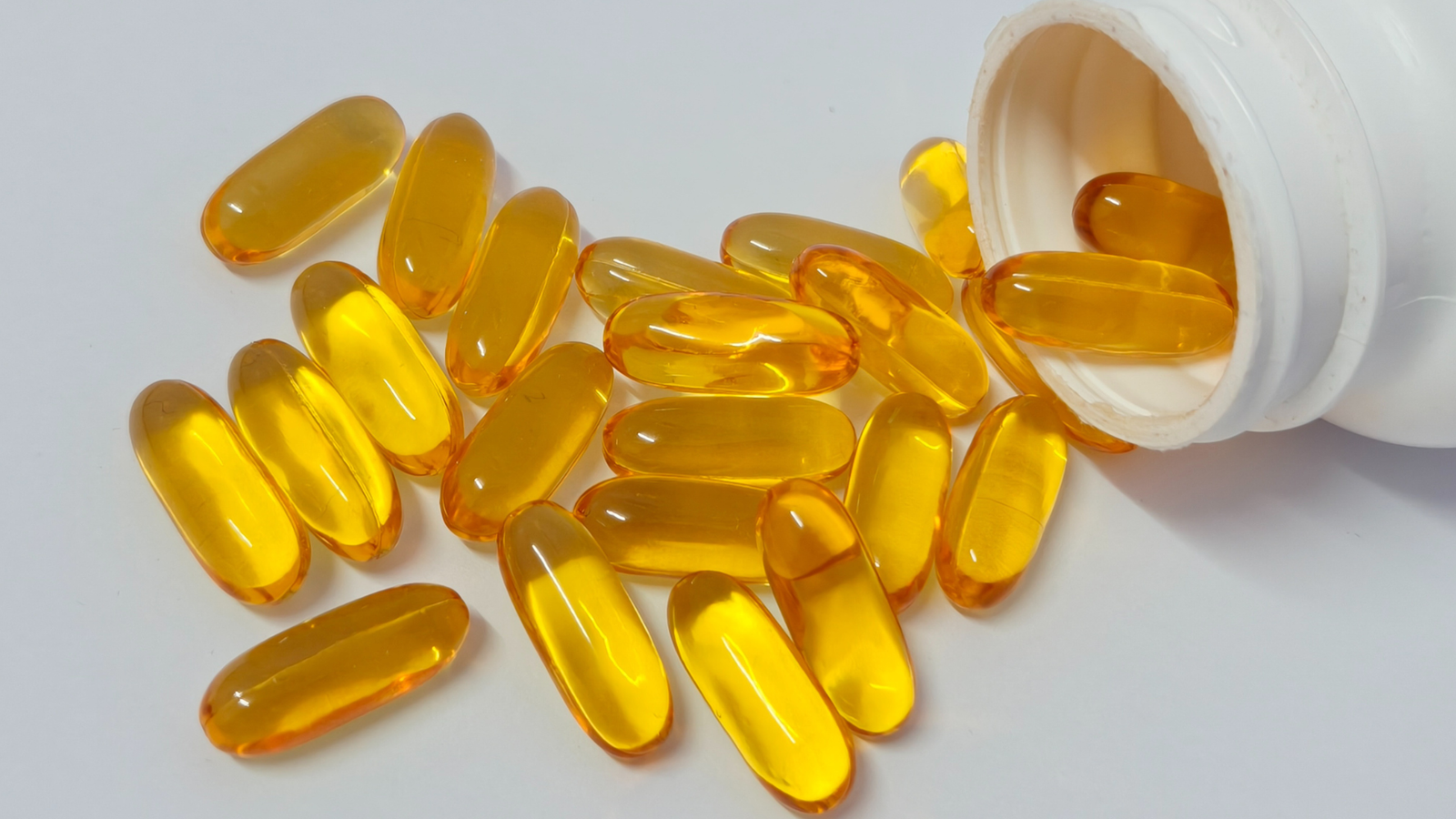
Look for supplements that list combined EPA + DHA content. like the one that I use and that I used while I was healing from eczema, from Dr. Berg’s Wild-Caught Omega-3 Cod Liver Fish Oil DHA EPA.
The reason for this is that sometimes, some supplement creators try to trick you by putting 1000mg of fish oil on the label, but there is only around 100mg of actual EPA+DHA. The important thing to know is that EPA and DHA do the healing, and you want as much of that as possible and not something else.
Third-party testing certifications are also very important and shouldn’t be overlooked. These tests show if the supplement creator uses the right ingredient, if their supplements and process of making them are safe, and if the doses that are promoted are true.
Also, it would be best if the fish oil supplement that you buy were made from wild-caught fish and not farm-raised. This is a huge deal breaker, and doing the right thing can make the difference between a supplement that will help you heal and a bunch of wasted money.
As I explained earlier, farm-raised fish are not fed the diet that they should originally have, which means they are fed cheap slop.
Because they are fed like this, they don’t have the nutrients that they should have had, and for that reason, you will not get the benefits you would from wild-caught fish oil. Not only that, but they could be very negative because of the conditions those fish were raised in and the food they were forced to eat.
You should take an omega-3 supplement with a meal containing fat to increase absorption by around 50%. You should also avoid taking it on an empty stomach, especially without a meal containing fat.
Product Spotlight – Dr. Berg Wild-Caught Omega-3 Cod Liver Fish Oil
Choosing the right supplement can be the difference between a product that will help you heal from your illness or help you achieve your goal and wasting money or even spending money on something that is unhealthy for you, and that will get you further away from healing.
But what if I told you that with fish oil, it is a hundred times more important than with a regular supplement or a vitamin? And this is because if you choose the wrong one from deceiving manufacturers that make their omega-3 from farm-raised fish that were not fed their natural diets.
Because of the way these fish were fed since birth, they have high levels of omega-6s instead of omega-3s, and high levels of omega-6s are part of the reason why you have eczema in the first place. Also, some of these supplements don’t have any third-party testing certifications that guarantee the quality and safety of the products they promote.
All of this could be avoided with the best omega-3 fish oil on the market, made by Dr.Berg Shop. This fish oil supplement is 100% wild-caught with a high dose of DHA and EPA. Dr. Berg’s fish oil has also been heavily tested by third-party testers.
I have been using Dr. Berg’s Omega-3 cod liver fish oil for over a year now, and I personally think it is the best one out of the dozen that I have tried. It was also the favorite one with the people that I work with and that I help heal from eczema.
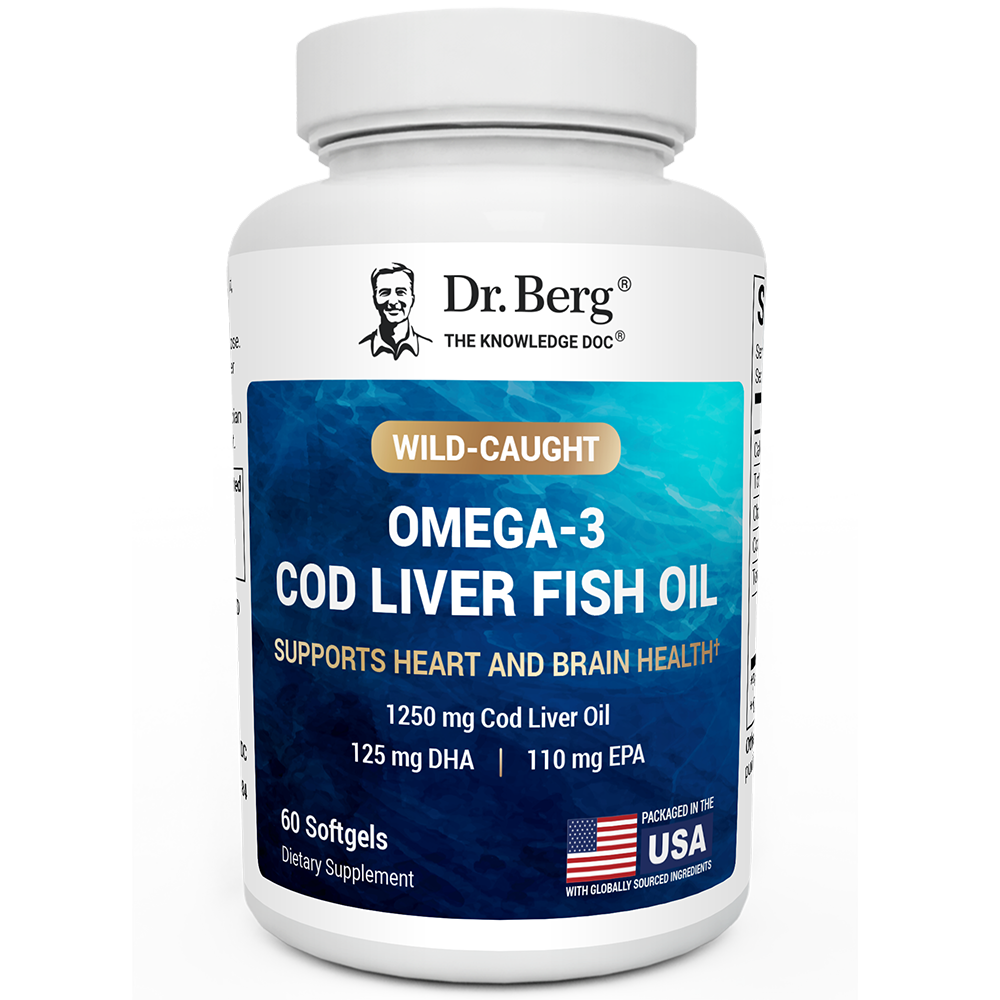
Dr. Berg Omega-3
Made From Wild-Caught Fish Only
Third Party Tested for Quality and Safety
High Dose of Both EPA and DHA Per Serving
Conclusion
Eczema is becoming a bigger and bigger problem worldwide, and more people than ever suffer from it on a daily basis. I was one of those people who had a severe case of eczema that made me depressed and gave me an infection that forced me to be hospitalized for almost a month.
Unfortunately, today, doctors only try to help you by covering up the surface problem instead of asking where that comes from and what the root of that inflammation and pain. Omega-3 is a part of healing from the inside, actually fully healing eczema and other skin problems.
Today, people have around a 40:1 omega-6 to omega-3 ratio, which is 10 times higher than it optimally should be. This is caused by our diets and unhealthy living, and the number one contributor to that is seed oils. If you want to learn more about this, you should definitely read my guide on How I Healed My Severe Eczema With Diet. Getting omega-3 daily from food and especially from supplements is a great way to get a better ratio of omega-6 and omega-3, which will lower the inflammation in your body and make your skin less inflamed.
Frequently Asked Questions
Does omega-3 reduce eczema?
Omega-3 can absolutely reduce eczema because it is, by its very nature, anti-inflammatory; also, it will close the gap between omega-6 fatty acids and omega-3 fatty acids by giving you more omega-3s. This ratio should be around 4:1, but because of our unhealthy diets, lifestyles, and consumption of seed oils, they can rise as high as 40:1, which creates all kinds of problems and inflammation.
What is the best form of omega-3 supplement for eczema
Fish oil is the best form of omega-3 in a supplement. Krill oil and algal oil are also good, but fish oils are superior.
Can omega-3 fatty acids cure eczema?
While it is very unlikely for it to cure your eczema on its own, it can drastically improve it, especially if you do other things that I recommend, like an elimination diet and some other supplements.
Are omega-3s safe for children with eczema?
Yes, omega-3 supplements are perfectly natural and good for almost all humans, but it is generally considered best not to give them to kids younger than 1 year old. The kids actually see the best results in their eczema because they have the least amount of damage done to their bodies, and it is best to act early with eczema because it will be easier and faster to heal it.
Can I get enough omega-3s for eczema from food alone, without supplements?
It is possible to get enough omega-3 without supplementation, but it will be very challenging to do so. Fatty fish is the best source of omega-3s, and you will need to eat almost 2 kilos of it every day, which is around 5 pounds, to get the optimal amount for recovery.
Does the omega-6 to omega-3 ratio really matter for eczema?
It matters a lot, and it is one of the main reasons why you have it in the first place. Our omega-6s are almost 10 times higher than they should be, and that creates a lot of inflammation. The best way to reduce this and lower your inflammation is to cut out seed oils and processed foods containing them and start using beef tallow instead.