
Vitamins are mandatory for humans, and we can’t survive without them. Most people focus on which vitamins and supplements for eczema healing you should take, which is very important, but just as important, or even more important, is how many vitamins you should take for eczema healing.
You don’t want to just have enough to not be deficient; if you have eczema, you should want to thrive and take a therapeutic amount that will help your skin heal. I completely healed my formerly severe eczema, and in this article, I will show you how many vitamins I consumed in both food and supplement form to heal, and what I tell dozens of people that I work with and that I helped heal.
Keep in mind that taking the right vitamins and the right amount of those vitamins is just one part of the whole picture. If you want to learn how I healed my severe eczema, you should read my article How to Heal Eczema Through Diet And Supplementation.
Vitamin D – The Most Important Vitamin For Eczema
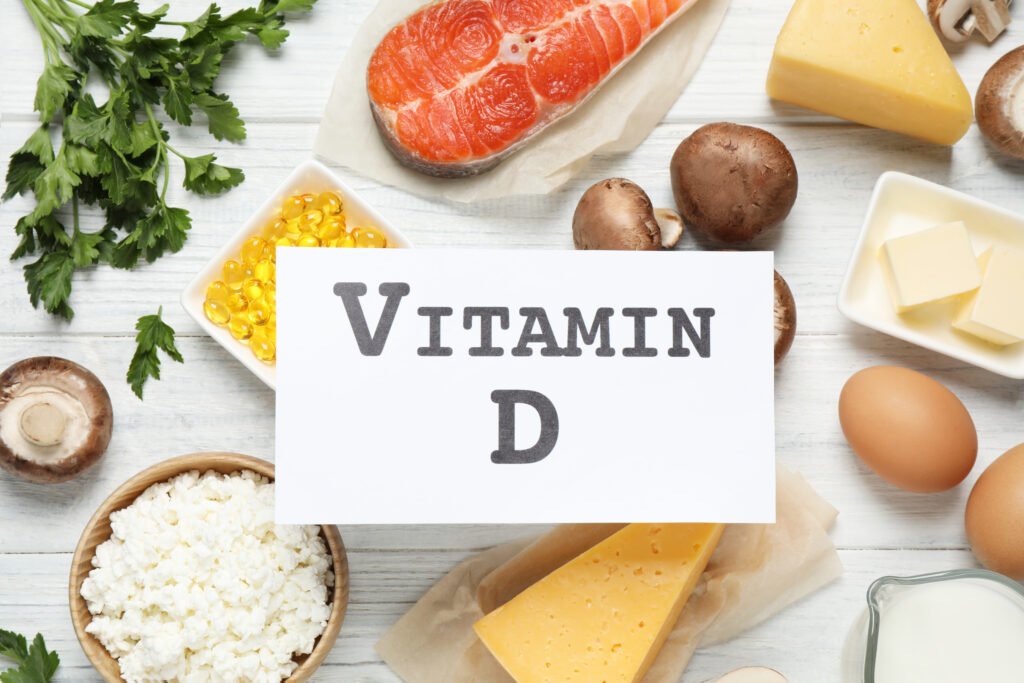
Vitamin D, especially vitamin D3, which is the best form of vitamin D, is the most important vitamin for people with eczema. Being deficient in any vitamin is not good for your health, but being deficient in vitamin D3 is the worst thing that can happen to you if you have eczema or any skin problem. This is because vitamin D3 is a natural anti-inflammatory and acts as an antibiotic, but without all the massive consequences that antibiotics have.
The sad thing about this is the fact that most people are deficient in vitamin D3, especially people with eczema. You see, people usually don’t get vitamin D from food, but from the sun and supplements.
Most people are not getting nearly enough sun as they should; getting enough sun is hard enough, but it is even harder for people with eczema because the sun can often be painful to their already inflamed skin.
There are also other factors with the sun that you can’t control, like the weather that day or where you live.
This is one of the main reasons why vitamin D3 supplements are so important, especially for people that strugle with eczema like us.
If you want to learn even more about Vitamin D3, you should read my article Vitamin D3 for Eczema: The Ultimate Guide.
Now, most people think that the optimal amount of vitamin D3 is around 1000IUs per day, but this number is the lowest you need to take for you to not develop bone issues.
But you should take much more; you don’t want to just be deficient, but you want to thrive and have enough for your skin to heal.
The minimal amount I would take is 10000IUs, which is one serving per day of the supplement that I take. I personally take 30000IUs per day, and I took even more when I had my last eczema-causing infection. Vitamin D3 is a fat-soluble vitamin, which means you should take it with a fatty meal for the best absorption. The supplement that I use, which is from Dr.Berg Vitamin D3+K2, also has vitamin K2 to maximize absorption and the positive effects, which most supplement companies don’t do to maximize profits.
Here you can learn more about The Best Vitamin D3 Supplement on the market.
Vitamin E — Antioxidant Protection for Inflamed Eczema Skin
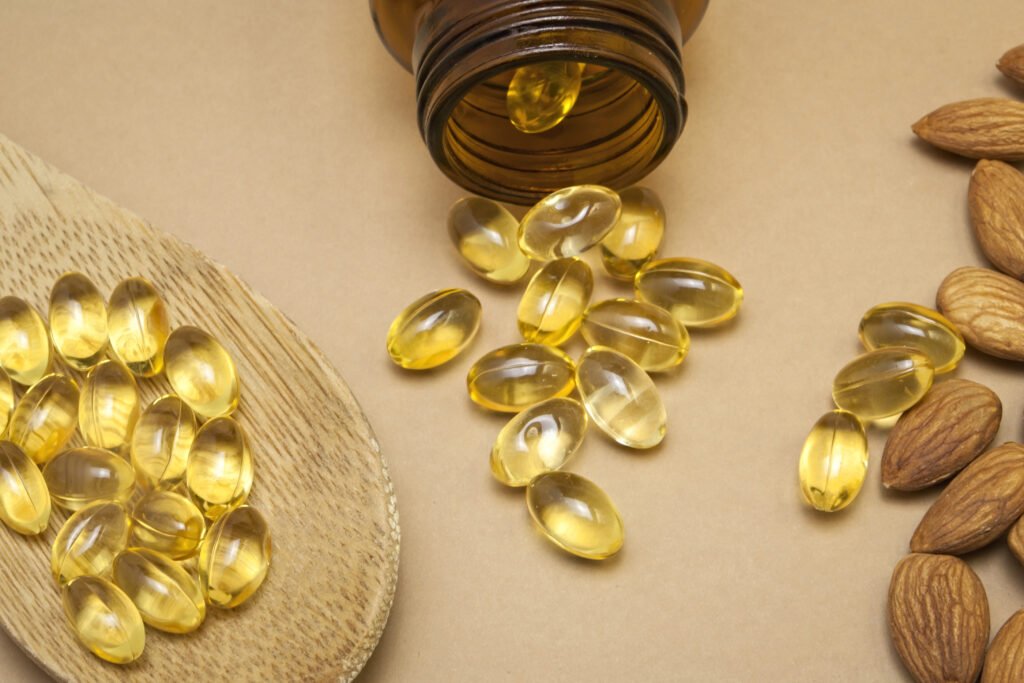
Vitamin E is a fat-soluble nutrient and a potent antioxidant. It is well known for protecting your body’s cells from oxidative stress, including your skin cells. It also supports your immune system, which protects you from wounds and infections.
You can also look at it like a shield for your skin cells, which fights against damaging molecules that make eczema inflammation worse and helps keep your skin barrier intact.
Vitamin E, like vitamin D, is a fat-soluble vitamin, which means that you should drink it with some fat, optimally with the first meal of the day, when fat-soluble vitamins should be taken.
The recommended dose for most people is 400 IUs per day, but considering a study that showed improvement when patients took 600IUs per day, you could consider taking that much. If you take 400IUs per day, that is also good because, including food, you will probably reach the right amount.
The best sources of vitamin E are meat, eggs, poultry, and some fruits. You may have heard that there is a lot of vitamin E in wheat, cereals, and vegetable oils, but those sources are not as bioavailable, which means your body will not be able to absorb and use it as well, even if there is a lot of it.
Also, you should avoid vegetable oils at all costs if you have eczema. I am of the strong belief that no matter what you do, if you consume seed oils, you will never heal from eczema, and removing them was a huge part of my healing journey.
You shouldn’t take more than 1000mg of vitamin E supplements per day, which is around 1100IUs. More than this can be toxic, especially if taken over longer periods.
Vitamin K2 – The Most Underappreciated Vitamin
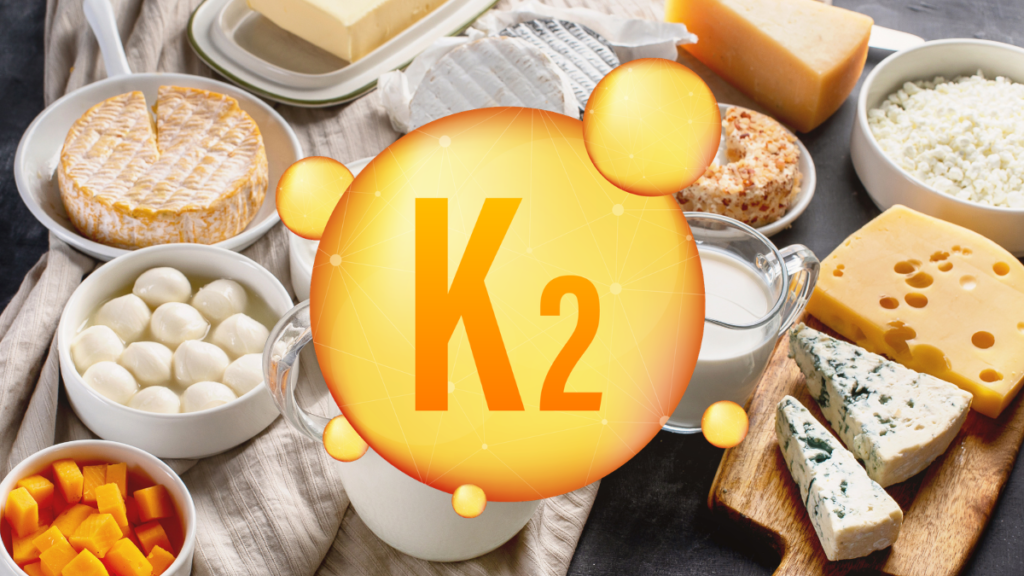
Vitamin K2 is a fat-soluble vitamin that plays an important role in supporting normal blood clotting, calcium metabolism, and bone and skin health.
It is in many ways helpful for your skin on its own, but also vitamin K2 helps vitamin D3 work properly, which is very important because vitamin D3 is by far the most important vitamin for eczema.
While vitamin K comes in two forms, which are vitamin K1 and K2, vitamin K2 was proven to be far superior to vitamin K1, which is the reason why I am going to talk mainly about vitamin K2.
This is very important because when I talk about the carnivore diet, which is the diet that healed my Eczema, and the diet that at very least significantly helped many people with their inflammatory diseases like eczema, iritis, and depression, there is always somebody talking about vitamin K1.
Vegans love to talk about vitamin K1, and they are always telling everyone that there is no vitamin K1 in meat, butter, eggs, etc., but they never mention that these things are full of vitamin K2, which is far superior to vitamin K1.
Top Vitamin K2 Food Sources:
- Natto (Fermented Soybeans): The richest source, providing up to 1000 mcg per 100 grams.
- Hard & Soft Cheeses: Gouda, Brie, and Edam are high in K2, particularly MK-8 and MK-9 forms.
- Organ Meats: Chicken liver and goose liver pate are excellent sources of MK-4.
- Egg Yolks: Especially from hens fed properly; provide a significant source of K2.
- Grass-Fed Butter & Dairy: Grass-fed butter and dairy contain higher K2 levels than conventional dairy.
- Sauerkraut: Fermented cabbage provides small to moderate amounts of K2.
- Fatty Fish: Salmon and sardines can provide small amounts.
For general health, you should be consuming around 100- 300 mg of vitamin K2 per day, but for the optimal amount that can help with eczema, you should maybe consider taking more.
Vitamin C — Helps Your Skin Heal and Stay Strong
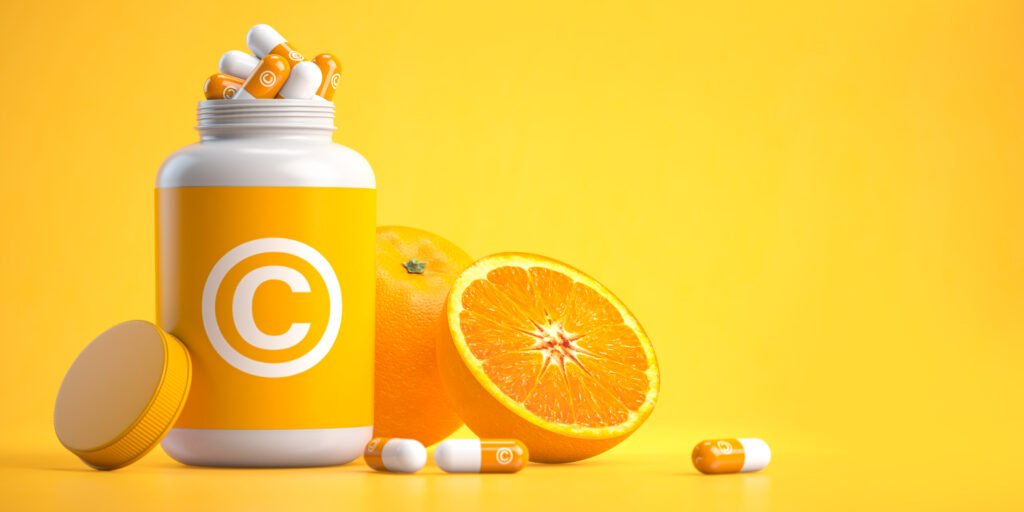
Vitamin C helps your body build collagen, which is the protein that keeps skin strong and helps eczema patches heal faster.
It also acts as an antioxidant that works hand-in-hand with vitamin E, so when you take them together, they are more effective than if you took only one of them.
Vitamin C is well known for supporting a healthy skin barrier, which is, of course, something that people with eczema don’t have. It acts as glue for your skin barrier by making it connected and strong.
Most servings in supplements are between 500 and 1000mg per day. I recommend you start with 1000mg per day, and then do up to 2000mg per day; above that is usually not as effective.
Foods with high doses of vitamin C are usually most fruits.
Zinc — The Skin-Healing Mineral Most People With Eczema Are Missing
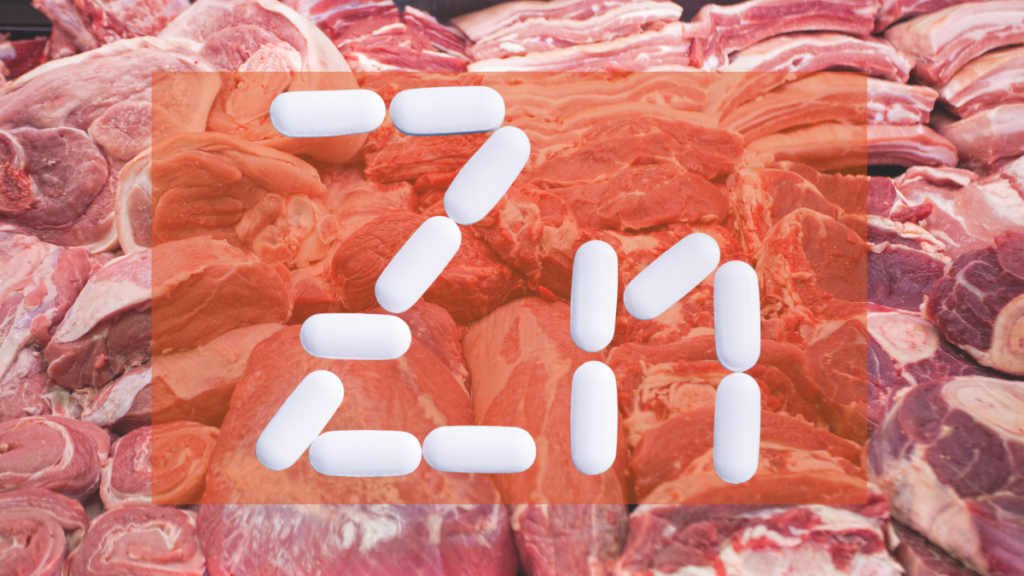
Zinc is an essential trace element commonly found in red meat, poultry, and fish. It is necessary in small amounts for human health, growth, and healthy skin.
Even though zinc is mostly known for being essential for building muscle, it is extremely important for skin health as well.
The first way zinc will help you with your skin is by supporting your immunity, which is very important for people with eczema, especially if you are struggling with infections like I used to. I believe taking a lot of zinc helped me as much, if not even more than vitamin D3, when I had my last eczema-caused infection. Since then, I have been taking vitamin D3 and zinc every day and have never had an infection since then.
Of course, I believe most of my success with healing my eczema was because of the carnivore diet, but these two factors had a lot to do with it.
Zinc will also make your wounds and inflammation go away faster. If you want to learn everything you have to know about zinc for eczema, you should read my article Zinc for Eczema: The Ultimate Guide.
Zinc gluconate and zinc picolinate are the forms that have the best absorption rate. If you see a supplement with other forms, don’t buy it.
By far the best source of zinc is red meat; other animal foods, such as chicken and fish, are great as well. People who demonize red meat will always say that the best source of zinc is pumpkin seeds, but that is far from the truth because it is not very bioavailable.
You should take 30mg of zinc per day in a supplement, along with a diet that is high in foods like red meat and fish. I usually take 30mg a day, and I used to take 60mg when I had infections.
How Much Vitamins and Supplements for Eczema Should You Actually Take?

Vitamin D3
You should take 10000IUs per day with dietary fat next to it to maximize absorption. Vitamin K2 is also very important for optimal results. The Vitamin D3 supplement that I use is Dr. Berg’s Vitamin D3+K2, which has vitamin K2, zinc, and some fat to maximize absorption. You can’t find good amounts of vitamin D3 in food, even though there is some in fatty fish; vitamin D3 can only be found in the sun and in supplementation.
Vitamin E
You should take between 400-600IUs per day. Vitamin E is also a fat-soluble vitamin, so you should take it with dietary fat like butter next to other fat-soluble vitamins like vitamin D3 for optimal results.
Vitamin K2
Vitamin K2 is the best form of vitamin K. Vitamin K1 is the other form, and it is usually found in seeds and plants, but it is not as absorbable as vitamin K2, which is mostly found in animal products like meat, butter, eggs, cheese, milk, etc. If you are going to get a supplement, you should take around 200- 300 mg a day, which is 2 servings in most supplements.
Vitamin C
Vitamin C is usually found in fruit and organs like the liver. You should take one to two thousand mg daily for the best results.
Zinc
In my opinion, zinc is the most underrated and underappreciated supplement on the list. By far the best source of zinc is red meat; other sources are chicken, eggs, and fish. You should take 30mg a day in supplement form for the best results.
Conclusion
Getting the right vitamins and supplements is very important for eczema, but equally or even more important is getting enough. With eczema, you don’t want to just not be deficient, but you want to have enough to thrive. Vitamin D3 is by far the most important vitamin for people with eczema because it acts as a natural antibiotic without side effects, and it is the best thing you can take for any inflammation, especially inflammation on the skin.
The important part is not to just have the optimal amount of one vitamin and supplement for eczema, but to have enough of them all. Vitamins usually work best together, and this is especially important with fat-soluble vitamins, which are vitamins D, E, K, and A.
If you want to know which supplements I use to heal my severe eczema, you should read the part of my website where I wrote about the best supplements for eczema healing.
FAQ
How much vitamin D3 should I take to help with eczema?
The minimal amount of vitamin D3 you should get per day is around 1000IUs to prevent severe deficiencies and bone issues. But you don’t want to just have enough to not be deficient, you want to thrive on vitamin D3 and get optimal amounts that will reduce inflammation and make your skin stronger. You should take 10000IUs per day with a meal containing dietary fat.
Can I get enough vitamins from food alone, without supplements?
Depends on the vitamin; most vitamins you can get from food, but there are vitamins like vitamin D3, which you can’t get from food in significant amounts. Also, vegetarians and vegans often struggle with getting many important vitamins, such as fat-soluble vitamins, which are only found in foods like red meat.
Which vitamin helps eczema the most?
Vitamin D3 is by far the most important vitamin for eczema. Vitamin D3 is, by its very nature, anti-inflammatory and acts like a natural antibiotic. It is also great for infections and allergies.
How long before vitamins start improving my eczema?
This depends on multiple factors. I personally still had very severe eczema even when I was taking vitamins, and my eczema started going away only when I got rid of seed oils in my diet and started the carnivore diet. Most vitamins take at least a week to show effects on the skin. The effects will probably happen faster, but they will not be visible on the skin.
How many vitamins should I take daily for eczema?
Vitamin D3 – 10000IUs, Vitamin E – 600IUs, Vitamin K2 – 200 to 300 hundred mg, Vitamin C – 1000mg, Zinc 30mg.