Zinc for Eczema: The Ultimate Guide

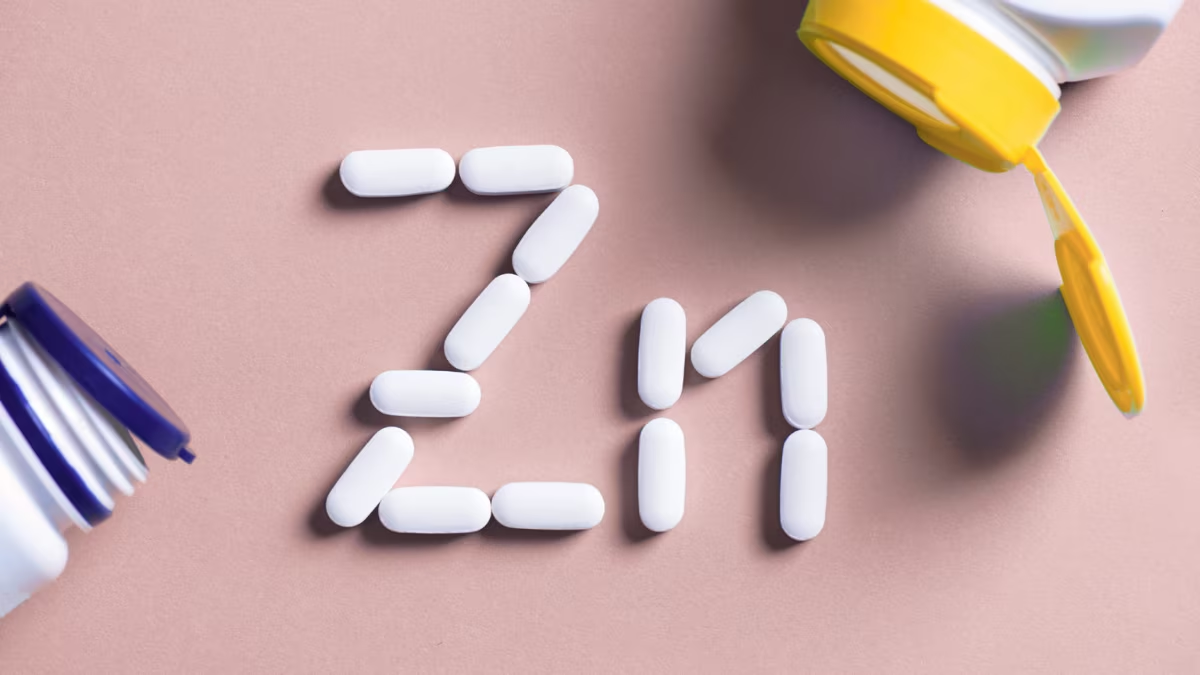
Zinc is one of the most important trace minerals for eczema and all skin problems; as important as supplementing zinc for eczema is, it is very underappreciated. Today, I will tell you everything you need to know about Zinc for eczema and atopic dermatitis, from supplementation to how much you should take every day and which foods contain the most zinc.
If you are interested in this topic, you should definitely also read my article about The most important supplements and vitamins for eczema healing to learn more about other supplements that help eczema besides zinc.
Studies show that people are extremely deficient in zinc, which becomes even more of a problem for people with eczema. Zinc is important for every part of your body, like muscles and the brain, but it is especially useful for skin and wound healing.
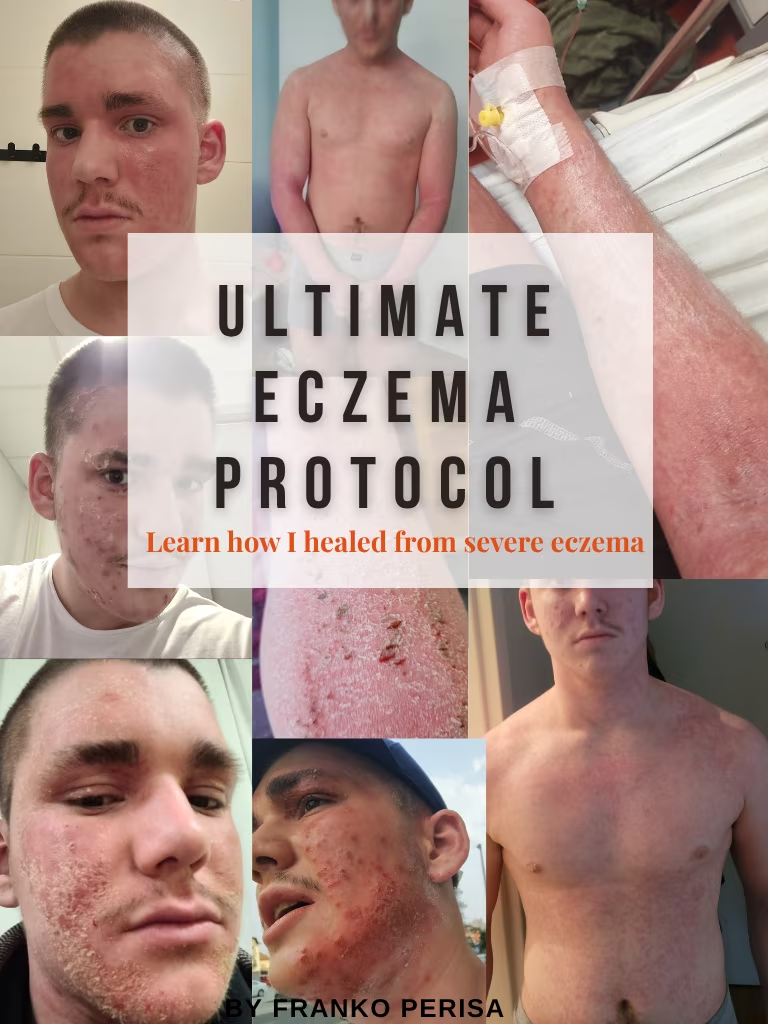
If you are somebody with eczema, you have no room to be zinc-deficient. You simply can’t afford it. I used to suffer from severe eczema since I was a child, and I healed from the ultimate elimination diet and supplementation. I also had a lot of heavy infections, and I can guarantee you that Zinc had a big impact on my journey to recovery.
There is no scientific evidence that proves that zinc on its own will significantly improve your eczema. Keep in mind that there is no one thing that can significantly improve or heal eczema, and if you want to know how I did it and how others are doing the same, then join The Ultimate Eczema Protocol, where I teach you how I healed by addressing the root cause.
The Ultimate Eczema Protocol
The Ultimate Eczema Protocol will teach you, step by step, how I healed from a severe case of eczema and how others are doing it too with this protocol.
What You Get For FREE (worth $740):
✅Ultimate eczema protocol (ALL COURSES)
✅Community with people who understand you
✅24/7 access to me (ask me anything)
What Is Zinc and Why Does Your Skin Need It?
Zinc is an essential trace mineral involved in over 300 enzymatic reactions in the human body. The important part is that it is not produced by the body and must come entirely from food or supplements.
The skin uses and needs zinc a lot, and deficiencies can cause issues on their own, but especially if you already have eczema.
A 2014 study has shown that EASI scores of kids with atopic dermatitis have improved compared to the group that didn’t take zinc in the form of a supplement. They also found that the supplemented group was less itchy throughout the study, which helped them get better sleep. This is just one of many studies showing similar effects of zinc on people with eczema.
Zinc is great for skin in many ways, but these 3 are the most important:
- It helps your body build a stronger skin barrier by producing keratinocytes
- It regulates inflammation
- It helps your immune system, which protects you from infections caused by eczema
Those are, in my opinion, the three main benefits of zinc for dermatitis and eczema, but obviously, there are many more that indirectly help your eczema.
I used to have horrible infections when I was at my worst with eczema; once I ended up in hospital for over a month, and to think they didn’t even recommend me to take zinc is sad when I think about it. They just fed me antibiotics 4 times a day, which destroyed my gut and made my eczema even worse.
You see, zinc is the best thing you can ever take for wound healing and skin healing in general. This is the reason why I take more than an average person; I want to compensate for all the zinc that my skin needs and needs, and also I am much more likely to get an infection because of all the trauma that my skin has gone through.
Zinc Supplements for Eczema: What to Take and How Much
Even though you can get Zinc through certain foods, supplementation is an excellent way to not only prevent a deficiency, but to actually thrive on Zinc, especially for people like us with eczema.
But you really shouldn’t just buy the next zinc supplement you see; it is very important that you understand which supplements are better and more absorbable than others, and I will tell you which one I use myself.
Some supplement companies will put huge amounts of zinc per serving, which may make you think that they are the best because their serving sizes are bigger, but that is most likely a cheaper, less bioavailable version that will not have many positive effects.
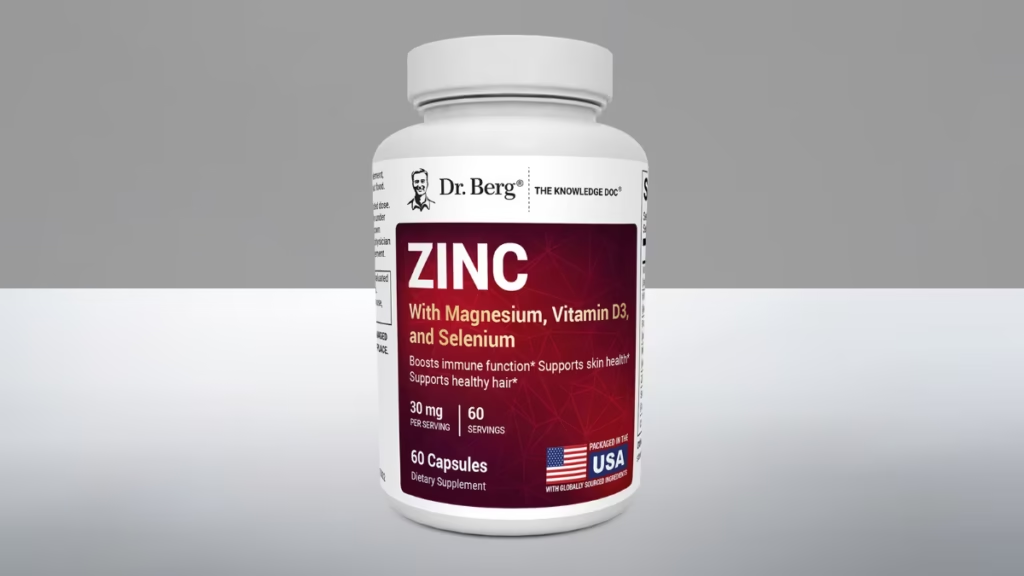
The best version is Zinc amino acid chelate, which is considered to be an absolute gold standard when it comes to zinc. The supplement that I use, which is Dr. Berg’s Zinc supplement, contains this version, but not only that, Dr.Berg put in Magnesium, vitamin B6, and copper for better absorption.
Zinc sulfate is the cheapest form, and there is a high likelihood that it will make your stomach ache, along with some other minor side effects. Zinc sulfate still works, and I would say it is much better than nothing, but you should definitely invest in a higher-quality zinc supplement that contains Zinc amino acid chelate.
Also, I think it is worth remembering that if you take zinc supplements long-term, you need to make sure your product also contains copper. Zinc and copper compete for absorption, and too much zinc can deplete your copper levels over time. A good zinc supplement will already include copper in the formula.
I take 30mg of zinc every single day through supplementation; the total number is probably a solid amount higher than that because I eat a lot of red meat, which is the best source of zinc in any food.
I recommend that practically everyone take that much through supplementation, and if you want more, it would be best if you contact your doctor first.
A Zinc Supplement Worth Trying — Dr. Berg Zinc with Magnesium, Vitamin D3 & Selenium
I have been taking Dr. Berg’s Zinc supplement every day for almost a year, besides his incredible YouTube videos, articles, and many other projects. Dr.Berg has a high-quality supplement company.
This Zinc supplement was made with the highest quality form of zinc, which is amino acid chelate. This form has a better bioavailability than any other zinc form used in supplementation.
Every serving has 30mg of chelated zinc, which, according to many experts, is the perfect everyday dose.
Dr.Berg puts Vitamin D3, Magnesium, and Selenium, as well as vitamin B6, to maximize the positive effects of zinc for your skin and whole body. This is extremely important, and most supplement companies don’t do this because they would rather cut costs.
By putting Vitamin D3 in the formula, this supplement already adds much more value than most supplements ever will. Vitamin D3 is commonly low in eczema patients and plays a big role in keeping the immune system balanced. It also has selenium, a mineral that works alongside zinc to protect your skin cells from damage, and magnesium, which helps reduce the inflammatory response in your body.
It also includes copper (as copper orotate), so you don’t have to worry about the copper depletion issue that I mentioned earlier.
It’s made in a certified US facility, comes in easy-to-swallow vegetable capsules, and has a 30-day money-back guarantee. There’s practically no real risk in trying it. Also, personally, the customer support service is amazing and very fast at responding.
You can also read the full Dr. Berg’s vitamin D3+K2 supplement review if you want to know more about my experience with it.
Zinc Creams and Ointments — Does Putting Zinc on Your Skin Help?
Even though I stopped using most creams when I started healing my eczema the natural way, and I don’t need them anymore because my eczema is almost mostly gone, zinc creams are one of 2 things I use to moisturize my eczema right now.
Zinc oxide has been used for decades by people as sunscreen, moisture for dry skin, or for healthy skin in general.
There are many eczema zinc benefits in a cream form, like creating a protective layer over your skin, locking in moisture so your skin doesn’t become dry and itchy, and helping fight off bacteria. These are all things skin with eczema desperately needs, and let me tell you, these creams were a lifesaver back when I had infections.
I really couldn’t shower without these creams because of open infected wounds on my face, legs, and arms, but when I put some on, the pain was much easier to deal with.

The Best Foods with Zinc For Eczema
Some people don’t want to tell you that Red meat is by far the best source of zinc of any food. The problem with the zinc from plant sources instead of animal sources is how bioavailable they are. Everybody always talks about how much zinc is in pumpkin seeds, but they don’t consider the fact that your body will not be able to use a big chunk of it.
Getting enough zinc will be no problem for you if you follow one of the three diets that I recommend for healing eczema. Personally, the lion diet healed my eczema, and if you want to know more about it, you definitely should read my ultimate guide on How to Heal Eczema Through Diet And Supplementation.
Other great sources of zinc besides red meat are eggs, Chicken, oysters, and from plant foods, pumpkins and beans.
If you are by any chance on a vegetarian or vegan diet, I would advise you to stop, but besides that, you should take much more zinc through supplementation than we who eat a lot of meat, because you are restricting the best source of zinc from any food.

Conclusion
Zinc didn’t just magically heal my eczema and infections on its own, and it will not do the same for you, but it was an important part of the process, which made things faster and more effective. Most people with eczema are deficient in it, which is a shame because of how important it is for your skin. It does three main things, which are building a stronger skin barrier, regulating inflammation, and strengthening your immune system.
Zinc is also the best thing you could take for infections that eczema causes on your skin, by helping your wounds heal faster, and it will make your body more resilient to these infections in the future.
The best source of zinc in food is red meat, chicken, eggs, oysters, pumpkin seeds, and beans. If you have eczema, you don’t want to take just enough zinc to not be deficient but to actually thrive. This is the reason why supplementation of zinc is great.
The best zinc supplements are those that are made from the amino acid chelate form of zinc, which is the most absorbable and the best quality zinc on the market. One of these is Dr. Berg’s Zinc supplement with Vitamin D3, Magnesium, and Vitamin B6 added for better bioavailability and positive effects. The best dose is one serving of 30mg a day.